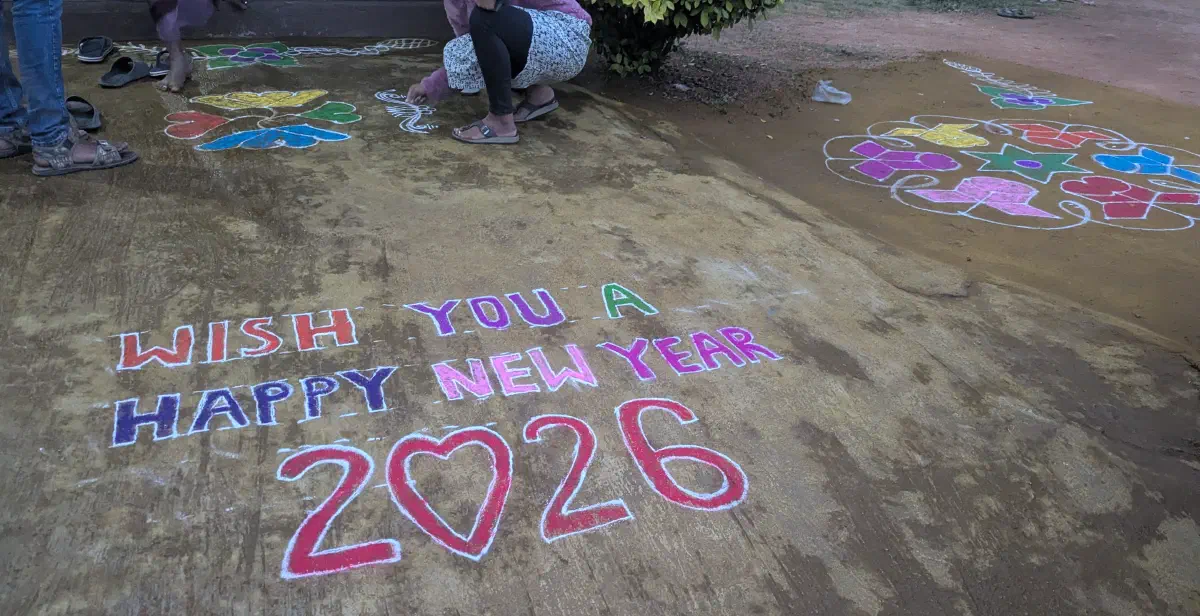

My girlfriend, originally from Bangalore, India, invited me to discover her country for the first time. We planned an itinerary covering both South and North India, visiting cities like Bangalore, Mysore, Hampi, Delhi, and Agra.
It was a unique opportunity to discover India’s cultural, historical, and architectural richness, as well as to meet her family.
Transport#
The trip to India and the Delhi-Bangalore journey were by plane. We took the train to travel from Bangalore to Mysore and to Hampi.
Night trains are a good option to save on a hotel night and save time on long journeys. They have little to envy to SNCF trains. However, there are many different comfort classes, ranging from unreserved seats to air-conditioned cabins with berths. Booking is recommended, especially for popular trains.
It is also possible to rent a car with a driver for shorter trips or day excursions.
Itinerary#
Part 1: Bangalore and Mysore#
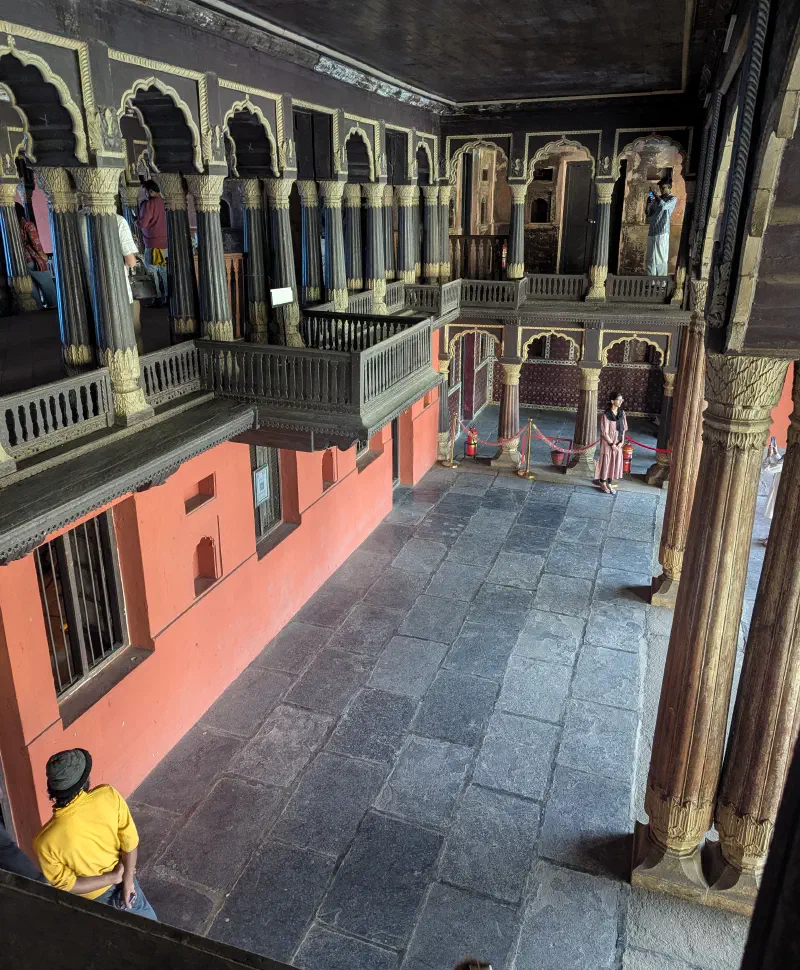
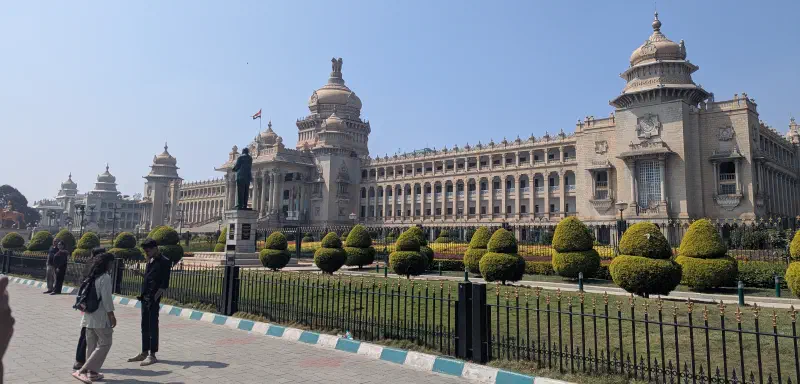
Our stay in Bangalore was an opportunity to meet up with friends and discover the city. We started with Tipu Sultan’s Summer Palace, a magnificent example of Indo-Islamic architecture built entirely of teak wood. We continued with the Lal Bagh Botanical Garden, famous for its glass house inspired by London’s Crystal Palace (although empty during our visit).
To escape the urban bustle, we explored two green lungs of the city: Freedom Park, a vast public park in the heart of the city, and Cubbon Park, very popular for its large expanses and paths.
The Basavanagudi neighborhood allowed us to discover several remarkable temples:
- Sri Dodda Ganapathi: housing a huge monolithic statue of Ganesha.
- Sri Balanjaneya Swami: dedicated to Hanuman, the monkey god.
- Sri Doddabasavanna: famous for its massive statue of Nandi carved from a single block of granite.
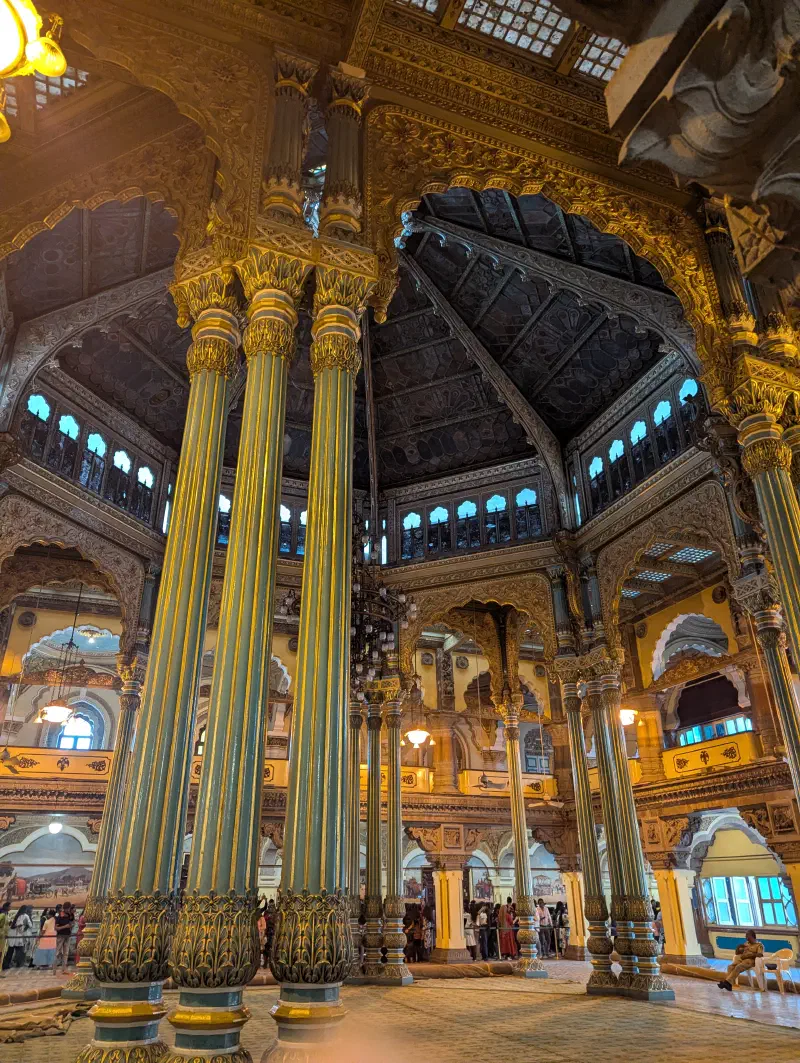
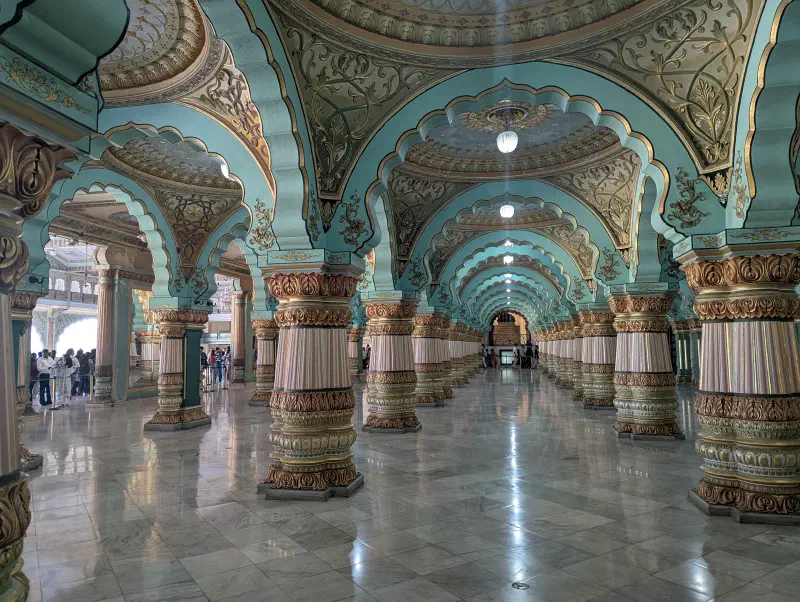
We then reached Mysore by train. The city is dominated by the famous Mysore Palace, an architectural masterpiece blending Indo-Saracenic, Hindu, and Muslim styles. We also enjoyed Kuvempu Park, a pleasant space with a lake and gardens.
Impossible to leave Mysore without tasting Mysore Pak, this local melting sweet made from ghee, sugar, and chickpea flour.
Part 2: Hampi#
Hampi is a grandiose archaeological site, the former capital of the Vijayanagara Empire, located amidst an impressive landscape of granite chaos.
We rented a scooter to easily move between the different sites scattered across this vast area.
We started with the Anjanadri Betta Temple, dedicated to the monkey god Hanuman. Perched on a hill, it offers a breathtaking panoramic view of the region.
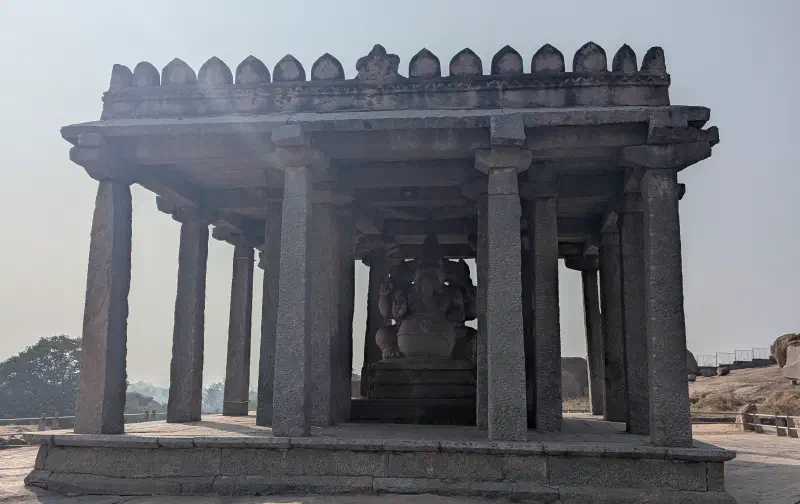
Our next two days were punctuated by the discovery of numerous temples and ruins, including:
- The Vittala Temple, famous for its iconic stone chariot (depicted on some banknotes) and its musical pillars.
- The Virupaksha Temple, still active, dedicated to the god Shiva.
Highlight of this stage: staying in Narayanapete, we had to load our scooter onto a small boat to cross the Tungabhadra River and explore the other bank. An experience in itself!
We attempted the ascent of Matanga Hill, but had to turn back at the summit due to an invasion of slightly too territorial monkeys.
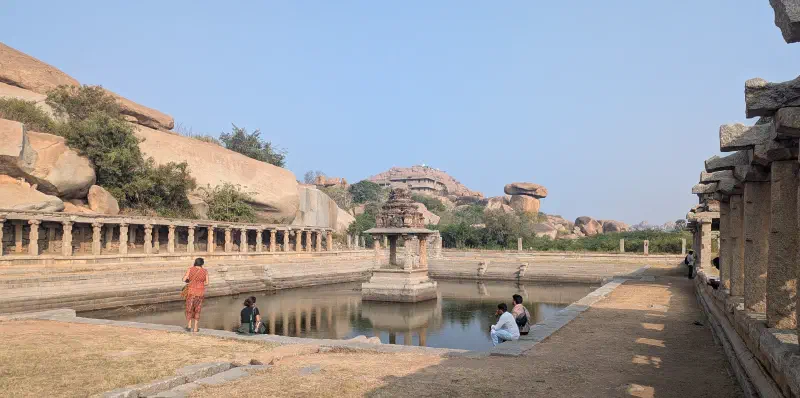
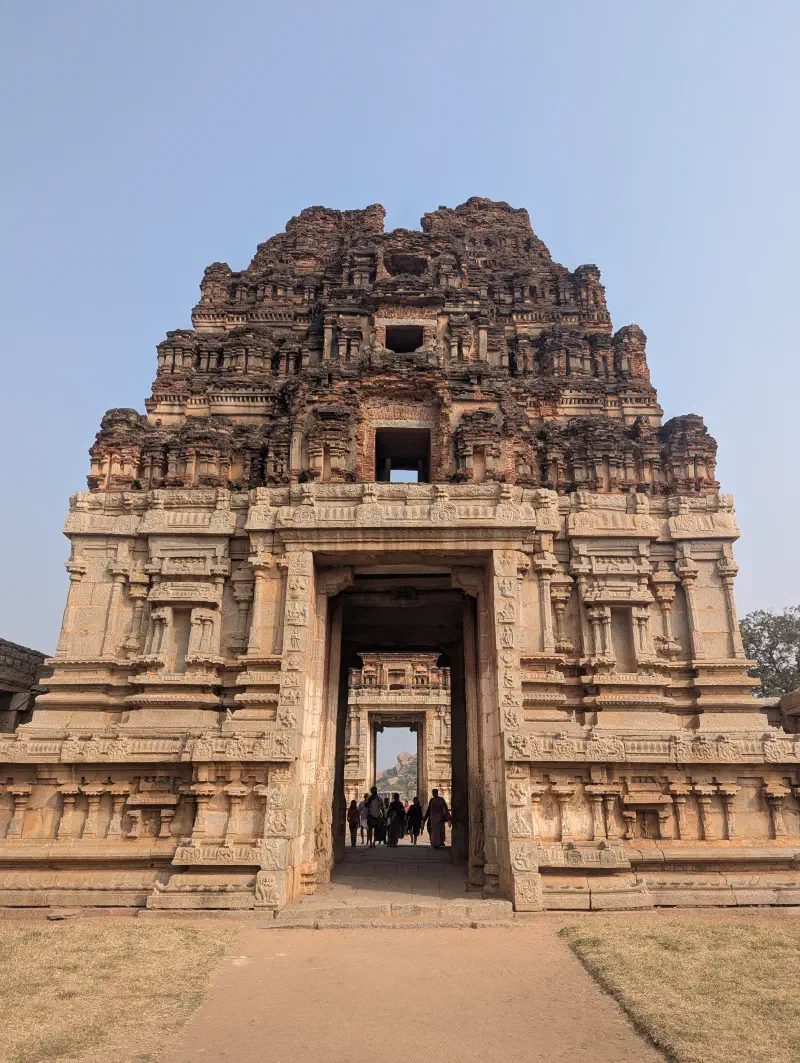
Finally, we visited the Pushkarani (sacred tank), the impressive royal elephant stables, and a buried temple dedicated to Shiva.
Part 3: Delhi and Agra#
Back in Delhi, we visited the Qutub Minar, a 73-meter high minaret adorned with calligraphy and geometric patterns. We also explored the Akshardham Temple, a modern religious complex impressive for its architecture and gardens where phones and cameras are completely banned.
We visited the Red Fort (Lal Qila), an imposing red sandstone fortress built in the 17th century by the Mughal Emperor Shah Jahan. The fort houses several palaces, mosques, and gardens, testifying to the grandeur of Mughal architecture.
We also took advantage of our visit to see other iconic places:
- The Lotus Temple (Bahá’í House of Worship): this modern temple, shaped like a lotus flower, is a place of worship for Bahá’ís. Its unique architecture and peaceful atmosphere make it a place not to be missed.
- Dilli Haat: this open-air market offers a variety of crafts, clothing, and food from different regions of India. It is an excellent place to buy souvenirs and taste local cuisine.
- Lodhi Garden: a peaceful park in the heart of Delhi, ideal for a relaxing walk. The park also houses several historical tombs dating from the Lodhi dynasty.
- Humayun’s Tomb: a magnificent mausoleum, precursor to the Taj Mahal, built for Emperor Humayun. The site is surrounded by well-maintained gardens and offers a stunning view of Mughal architecture.
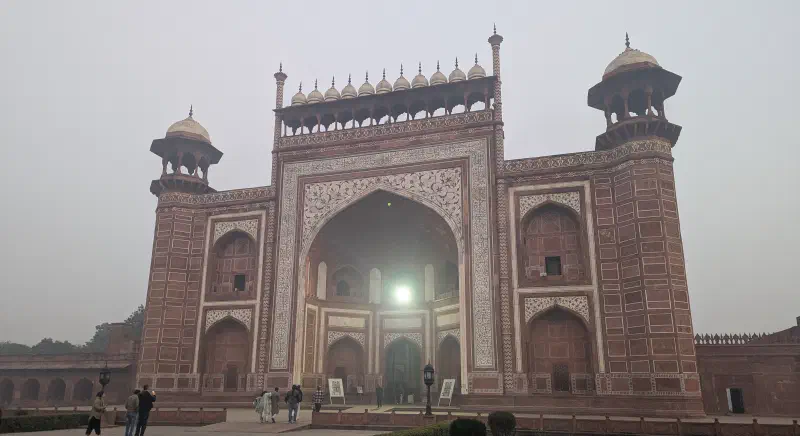
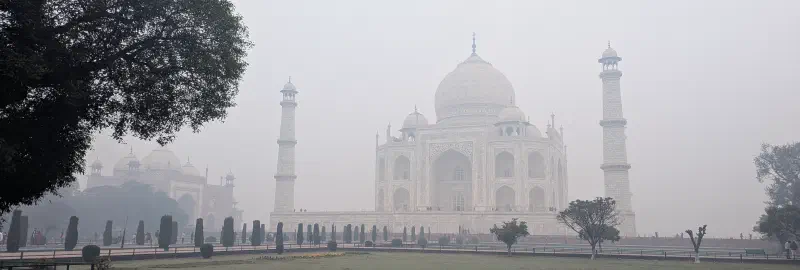
We dedicated a whole day to visiting Agra, mainly to admire the famous Taj Mahal. This white marble mausoleum, built by Emperor Shah Jahan in memory of his wife Mumtaz Mahal, is an architectural masterpiece and a symbol of eternal love. Unfortunately, the weather was overcast during our visit, but the beauty of the site remains undeniable.
We also visited the Agra Fort, another imposing red fortress that offers a stunning view of the Taj Mahal from its ramparts.
Payment Methods#
The preferred payment solution in India is UPI (Unified Payment Interface). It is therefore convenient to have a UPI-compatible app installed on your phone, but this is not easily accessible to foreigners. Mony offers a compatible solution, but involves fees.
I was able to use international payment cards (Visa and Mastercard) without problems in large establishments (hotels, restaurants, shops).
However, it is always good to have some cash in Indian rupees for small shops or in rural areas.